What to Know Before Filling Your Water Tank
Before filling your water tank in South Riyadh, know your tank capacity roughly to judge the fit of an 18-ton tanker, check the tank is clean and free of obstacles, identify the tank type (ground or rooftop) and the filling-point location, and ensure safe tanker access. These points help you choose the right volume and get a smooth fill.
Published: · Updated:
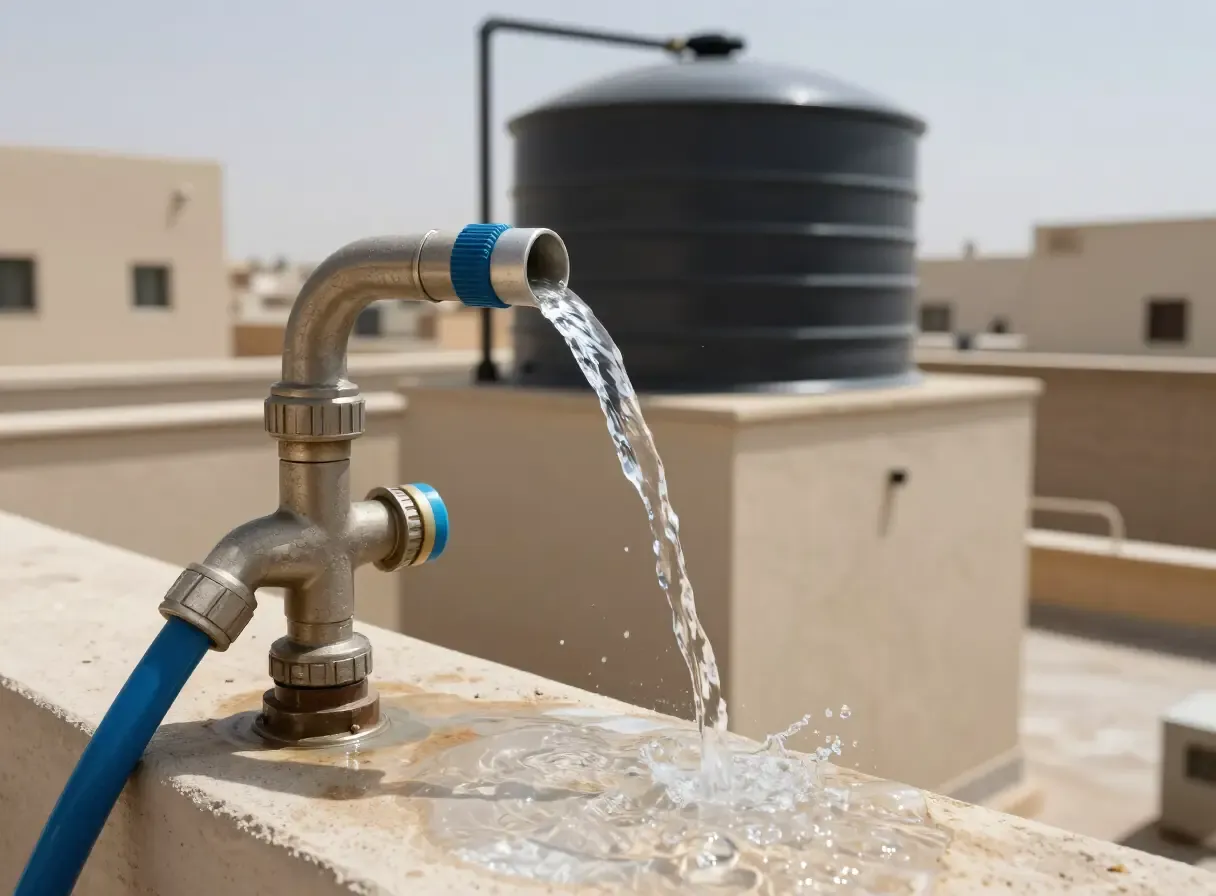
Why these points matter before filling
Filling a tank is not just about water arriving; it requires a fit between tank capacity and the tanker volume, safe tanker access to the filling point, and a tank that is ready to receive water. Overlooking any of these can lead to an unintended partial fill, a delay, or impossible access. Knowing these details in advance makes one visit enough instead of reordering.
Know your tank capacity
Tank capacity is the most important factor in deciding whether an 18-ton load (about 18,000 litres) suits your tank. Some large ground tanks take the full volume, while smaller or rooftop tanks may need a partial fill. Capacity is usually printed on the tank itself or in the home specifications; tell us when you contact us if possible so we can estimate the fit.
How to estimate an undocumented tank
- Look for a capacity label or stamp on the tank body.
- Check the home or villa specifications from purchase or rental documents.
- Compare the tank dimensions with standard tanks of known capacity.
- If you cannot find it, describe the tank size and type when you contact us.
Tank cleanliness before filling
The tank condition affects the quality of stored water. Before filling, inspect the tank visually and make sure it is free of sediment or insects. Ensure openings are sealed against dust and insects after filling. Cleaning the tank periodically is recommended to maintain water quality, especially if water is stored for a long period.
Tank type and position
- Ground tank: located at ground level or buried; filling is direct through the tank opening.
- Rooftop tank: located on the roof and needs a dedicated filling line reaching it.
- Pinpoint the filling-point location (front, back, rooftop) to make access easier.
The tank position and its distance from the tanker path affect filling speed and ease. Tell us whether the tank is ground or rooftop, and if it is far from the tanker parking spot so we can prepare the right hose length.
Securing tanker access to the filling point
The 18-ton tanker is a large vehicle, so a route free of obstacles reaching as close as possible to the tank is preferred to make extending the filling hose easier. Move cars and obstacles before the appointment, and describe the road width and gate when you contact us. Safe access is essential for a smooth fill.
Checklist before ordering a fill
- Tank capacity roughly (if possible).
- Tank type: ground or rooftop.
- Filling-point location on the property.
- Tank condition and cleanliness visually.
- Any lock or cover that needs removing.
- Notes on road width or obstacles.
- Name and number of the person receiving the tanker.
Common mistakes before filling
- Not knowing the tank capacity, making the volume fit hard to estimate.
- Neglecting tank cleanliness before filling.
- Not mentioning the tank type (ground or rooftop) when ordering.
- Leaving obstacles in the access path to the tank.
- Not removing a tank lock or cover before the tanker arrives.
To order the filling service or learn about the tanker, see the dedicated pages.
Useful links
For a reliable drinking-water order, see our 18-ton water tanker in South Riyadh service.
Common questions
No, but knowing it roughly helps estimate the fit; capacity is usually printed on the tank.
Need an 18-ton water tanker in South Riyadh?
Contact us now by call or WhatsApp and send your location to confirm delivery.